
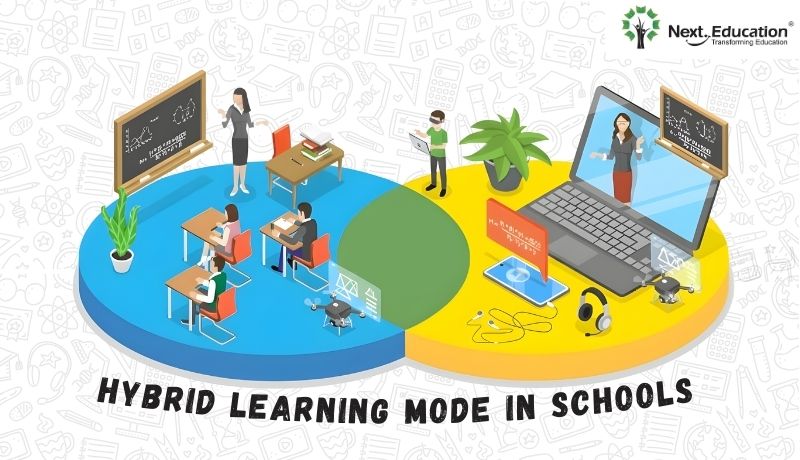
As education evolves at a rapid pace, many schools are moving beyond traditional classroom-only teaching. Recent developments, such as Delhi’s shift to hybrid learning in response to rising air pollution levels, highlight the growing importance of flexible and blended education models. The hybrid learning mode in schools, which combines online and in-person instruction, has emerged as an effective approach that helps schools stay future-ready while meeting diverse student needs.
Why does Hybrid Mode Matter?
Because it addresses actual issues in the classroom, hybrid learning is unique. Students are not prepared for a world that values critical thinking, creativity, and adaptability by traditional teacher-centred methods and rote learning. In hybrid models, instructors combine in-person instruction with digital content and lesson customisation.
By utilising resources both inside and outside the classroom, this blended learning strategy helps students continue their education. When necessary, schools can alternate between in-person and remote instruction. Teachers can plan lessons, assign work, and monitor progress without falling behind by using tools like Learning Management Systems (LMS).
This is more than just a fad, as technology plays a bigger role in education, and with new regulations like NEP 2020. It’s a clever way to address the demands of modern education.
What is a Hybrid Learning Mode?
Hybrid Learning Mode refers to an educational approach where classroom teaching and digital learning are seamlessly integrated in a structured and organised manner. Instead of relying on multiple disconnected apps or tools, a robust hybrid learning system consolidates lessons, resources, and communication on a single platform.
Request for Hybrid Learning Software
What are the benefits of Hybrid Learning Mode in School?
Digital resources allow students with varying learning styles and needs to work at their own pace. Students’ interest is maintained, and interactive, audio, and visual modules improve their understanding of the material. It aids in education in the following ways:
1. Inclusive and Flexible Learning
Digital resources allow students with diverse learning styles and needs to interact with content at their own pace. Visual, auditory, and interactive modules facilitate deeper engagement and a more meaningful understanding.
2. Empowering Teachers
Teachers can plan and deliver lessons efficiently with LMS-enabled tools. With features such as course structuring, homework tracking, and real-time analytics, educators can spend less time on administrative tasks and more time on teaching.
3. Continuous Learning Beyond Classrooms
Through digital solutions, students can revisit content, clarify their doubts, and reinforce their learning outside of school hours. This expands learning opportunities and supports mastery of the material.
4. Data-Driven Decision Making
Hybrid systems provide valuable data on student progress and performance. Leaders and teachers can identify learning gaps early and tailor instruction to meet individual needs, making education more responsive and effective.
Hybrid learning is quickly becoming an essential approach for today’s educational institutions. By combining in-person teaching with digital tools, teachers can create flexible and inclusive learning environments. Solutions like Next Education’s NextOS help schools establish hybrid models in a clear and lasting manner, supporting teachers, engaging students, and preparing schools for the future. Many schools are exploring hybrid learning. Take the next step by exploring integrated platforms that combine teaching, learning, and assessment. Choose solutions that make education more effective, engaging, and meaningful for every learner.
About The Author



No Comment